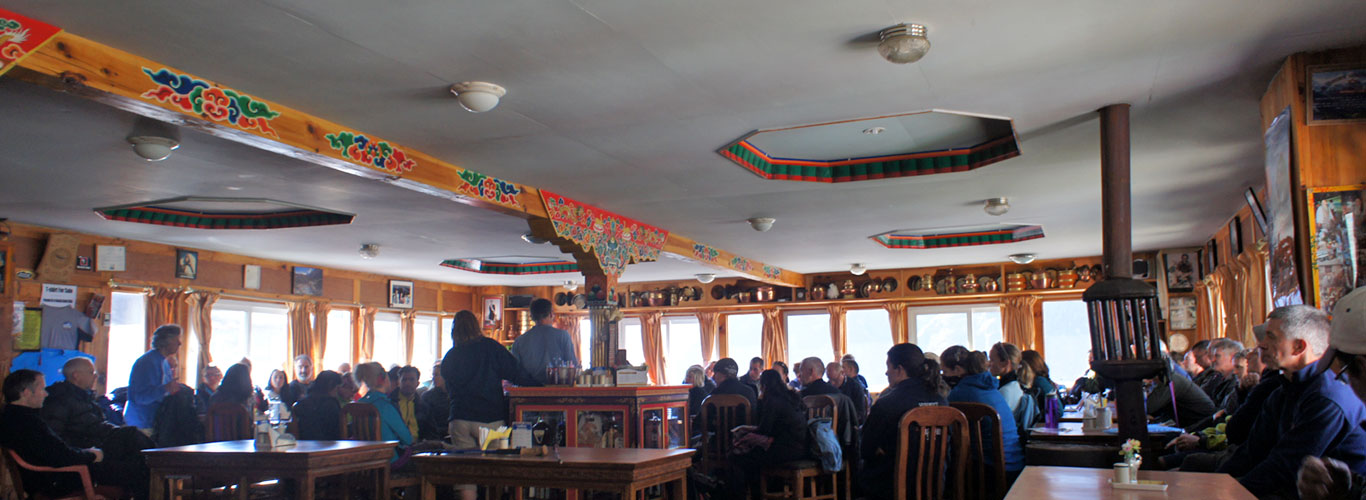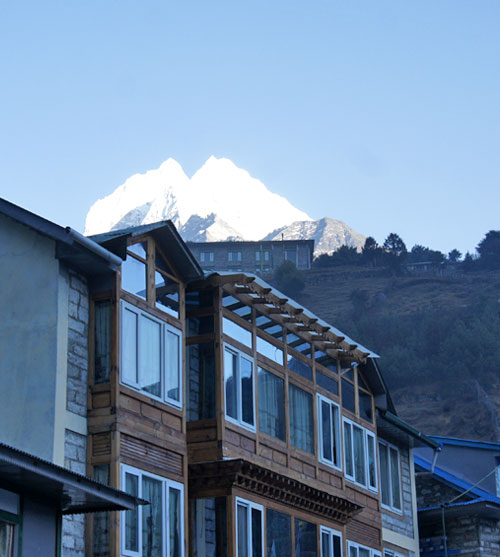
Sagarmatha National Park (1,148 sq. km), established in 1976, is located in the Khumbu region for the protection of its unique natural landscape containing the world's highest mountain of Sagarmatha (Mt. Everest) at 8,850m. above sea level. It encompasses major Himalayan ecosystem and shares boundary with Makalu-Barun National Park in the east, and Qomolungma Nature Preserve of Tibet Autonomous Region towards north.
Most of the Park is steep and rugged, the terrain broken by deep gorges and glacial valleys, but in its major valleys, there are some relatively flat areas, which are used for growing crop and grazing by the Sherpa community. These village area are officially excluded from the Park and do not come under its authority.
UNESCO declared this National Park a World Heritage Natural Site in 1979 in recognition of the significance, of the World's highest mountain, its sub alpine types of flora and fauna, together with the unique cultural heritage of the Sherpa people who are the local residents.
Vegetation
Park can be roughly divided into three altitudinal belts a forested lower zone, a middle zone of alpine scrub, and an upper alpine zone. Within these zones is a variety of habitats in which wildlife occur. The vegetation varies according to its location, site and altitude.
The common vegetation that occurs in the park includes Hemlock, Oak, Blue Pine, Junipers, Silver fir, Birch, Rhododendron trees and shrubs. During the spring and in mid- summer, a wide variety of rhododendrons bloom at their best in and around the hillsides of Namche Bazaar. Khumjung, Thami and Tengboche.
Only about 3 of the parks are forest, with 28 grazing land and 69% "barren” land above the tree line. (Six of the eleven vegetation zones described by Doberman (1975) for the Nepal Himalayan are represented in the park: lower sub-alpine, upper sub-alpine, lower alpine, upper alpine, sub-Nival and permanent snows zones)
Top
Tourism & It's Impact
After the first 'ascent of Mount Everest in 1953, the mountains in the park have been the targets for many mountaineering expeditions. Adventure trekking tourism began in the 1970s making the park a famous tourist destination in Nepal. Over the lost two decades, this park has seen dramatic increase in the number of visitors. While the park visitors to Sagarmatha National Park were only 3,600 during 1976; it has increased to over 24, 561 in 1999.
While tourism has greatly helped by local economy by improving the living standard with better health care, education, and building structure, the soaring number of visitors over the decades in this fragile region has resulted in increased environmental degradation of these sensitive mountain areas.
The Park and buffer zone forests are, -under tremendous pressure from tourism. Between 1986 and 1992, the number of hotels and teashops in the Park rose from 73 to 194. The average consumption of fuel wood by trekkers staying at local lodges is almost the double (4.5 kg. per trekker per day) of the quantity used by the local people.
The greatest pressure on plants as a fuel source is at the higher altitude above tree line at about 4,700m. Here the juniper shrubs are harvested as fuel wood. -Plant establishment in this region is difficult and growth is also very slow. Once the plant cover is removed, the chances for soil erosion increased significantly.
The other negative physical impacts of the Visitors in park are related to littering and waste disposal. Plastic. Glass bottles, tin foil and batteries discarded along trekking routes, campsites and outside lodge pose a major threat to the environment.
To overcome the problems with the empty bottles in the Park, the Nepalese Government has banned the importation of beer; coke and other soft beverages packed in bottles. Only alcohol and soft beverages packed in cans are permitted inside the park.
Mountaineering expeditions must now remove all non- biodegradable materials outside the park. The Park rules and regulations require expeditions and organized trekking groups to be- self sufficient in artificial fuel upon entering the park.
The organized trekking groups including the supporting staff are strictly prohibited to use of - firewood inside Sagarmatha National Park.
Your full co-operation is required to help preserve the world's highest protected area.
Visit www.tourism.gov.np for Mountaineering Rules and Regulations.
Top
Wild Life
Sagarmatha National Park, in common with the rest of the Nepal Himalaya, has a comparatively low number of mammalian species. The rare species of wildlife found in the area include Himalayan Common Langur Serow, Red Panda, Wolf, and Himalayan Bear and- Snow leopard. Other common species are Himalayan Tahr, Goral, Musk Deer, Himalayan Marmot and Pika. Recent surveys indicate an increase in the populations of Tahr and Musk Deer following the establishment of the park. Up to 10 Tahr per 100 ha occurs (Bauer and Paudyal, 1988) in the parks, which are important for maintaining the alpine meadow ecosystems. The snow leopard a charismatic flagship species for mountain biodiversity for mountain biodiversity conservation, exist in the park. The Himalayan marmot occurs in a range from 4500 m to 6000 m.
This park is also home to many different birds. One hundred and eighteen species of bird have been recorded in the park. High altitude birds, include the Danphe (National Bird), Blood Pheasant, Robin Accentor, White-Throated Redstart, Himalayan Griffons, vultures, rose finches, Snow Cock, Jungle crow and Snow pigeons that many visitors love to watch for hours. Birch-Rhododendron forest and Quercus, Semecarpifolia forest are important bird habitats in the park.
Top
Himalayan Tahr
Himalayan Tahr is the only member of the goat family found in Nepal today. They occur all along the Himalayan Range below 4,000 m. Preferring very steep terrain of cliffs and dense scrubs forests. Like most goats they herd together and graze along the open patches of steep cliffs. The rutting season is in winter and the kids are born in July.
Today the main pressure on Tahr is competition for food by livestock grazing, as hunting has been restricted. Natural predators are leopards, wolves and wild dogs.
Top
Musk Deer
Musk Deer are found along the Himalayan foothills. They prefer steep rocky cliffs covered with dense mixed forest and rarely come out into open unforested areas. Musk Deer are solitary, shy animals, except in the breeding season from December to January. One or two fawns are born from April to June.
As well as having natural predators such as leopards and wolves the musk deer has been heavily hunted because of a special feature of the male; a musk gland. The dried product is highly valued in perfume making. Because of this the deer has been and still is hunted to the point where its future is threatened.
Top
Yeti
The yeti or abominable snowman is thought to live in the high Himalayas. The Sherpas distinguish three different types of yeti. Drema, or Telma the messenger of calamities, Chuti which preys on goats, sheep and yaks, and Mite or Midre which also attacks animals and sometimes men. Nobody has ever see a Yeti, only the findings of mysterious footprints in the snow and several incidents of yaks killings support the legend.
Top